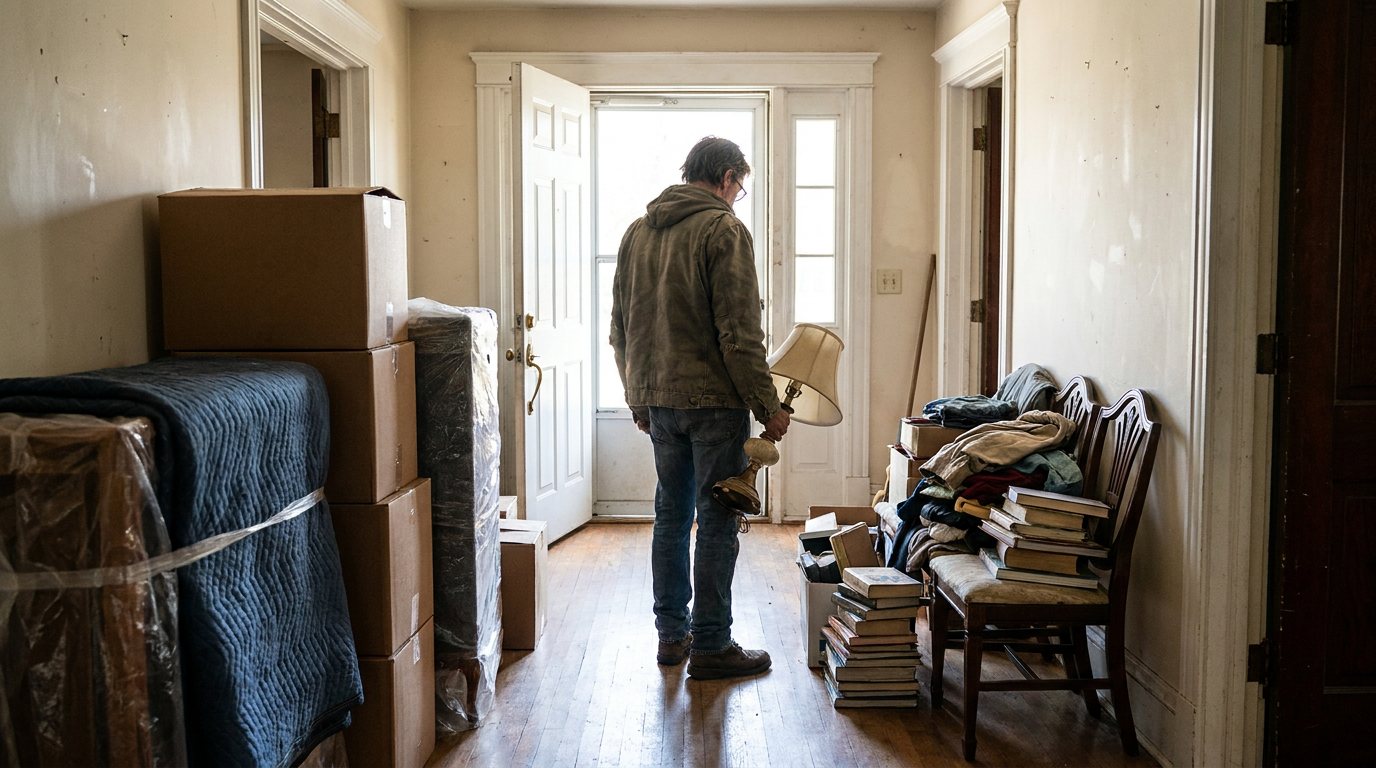
Plenty of moves involve more than simply carrying furniture from one address to another. Downsizing after the children have left, emptying a parent’s home, or handing back a rental property often means some belongings travel to a new home while the rest need to be donated, recycled or disposed of. The question many people face is whether to arrange the clearance and the removal separately, or have them handled together.
When the two jobs overlap
A clearance and a move tend to go hand in hand in a few common situations:
- Probate and estate work. Family members may want to keep a handful of pieces, while the rest of the house needs emptying before a sale.
- Downsizing. A smaller home simply will not take everything, so a portion of the furniture has to go elsewhere.
- End of tenancy. Landlords and tenants often need a property emptied completely by a fixed date.
- Selling a property. Buyers usually expect vacant possession, which can mean dealing with lofts, garages and sheds as well as the main rooms.
In each case, the timing of the clearance and the timing of the move are linked. If one slips, the other usually does too.
The case for booking them separately
Using different firms for each part can make sense if the clearance is large and the move is very small, or if the clearance is not needed until weeks after you have moved. It also lets you shop around for each service independently.
The downside is coordination. You become the project manager, arranging access for two teams, making sure nothing intended for the new home is taken by the clearance crew, and dealing with the gap if one company runs late. With a probate property some distance away, that can mean several extra trips.
The case for one combined job
Having one company handle both usually means a single point of contact, one visit to assess the property, and one plan covering what goes where. The crew can load the items you are keeping, then deal with everything else, without two separate teams working around each other in the same hallway.
In Staffordshire, Evans Removals offers this kind of combined service. Its house clearance work covers probate, property sales and end of tenancy, paired with a removal under one point of contact, across an area stretching from Lichfield and Tamworth up to Leek and Cheadle. Items are sorted, with some donated to local charities where possible and waste disposed of responsibly. For anyone weighing up removals in Staffordshire alongside a clearance, the firm also offers specialist handling for antiques, artwork, pianos and gym equipment, which can matter when a family home contains a few awkward or valuable pieces.
Making either option work
Whichever route you choose, the preparation is much the same. The most useful thing you can do is decide what happens to each item before anyone arrives. A simple approach is to sort everything into three groups:
- Keep: going to the new home or to family members.
- Donate: in good enough condition for charity or reuse.
- Dispose: broken, worn out or unsuitable for reuse.
Coloured stickers or tape on furniture help crews see instantly which group something belongs to. Write the list down as well and share it with whoever is doing the work, because stickers do occasionally fall off.
Go through drawers, cupboards and pockets before the day. Paperwork, photographs and small keepsakes turn up in surprising places, especially in a home someone has lived in for many years. If you are dealing with an estate, keep anything that looks like it might be needed for the paperwork until it has been checked.
Questions to ask before booking
Ask any provider how they decide what can be donated, how waste is disposed of, and how they keep items you are keeping separate from those going elsewhere. Check what is included in the quote and whether the clearance and removal can happen on the same day or need to be split.
There is no single right answer to the one-job-or-two question. But when the timings are tied together, and especially when the property is emotionally or physically difficult to deal with, bringing everything under one plan can make a demanding few days a great deal more manageable.